

Air Management for High-Speed Textile Machinery in Ichalkaranji
Ichalkaranji’s textile ecosystem is expanding with advanced weaving, spinning, and finishing units that rely heavily on automation. As these machines become faster and more sophisticated, the demand for precise and uninterrupted compressed air has become central to production stability. A well-managed air system directly influences fabric uniformity, machine life, and overall productivity.
Why Compressed Air Is a Strategic Asset in Ichalkaranji Mills
Whether it’s air-jet weft insertion, yarn movement, suction extraction, or pneumatic lifting, compressed air governs critical textile operations. With mills operating multiple shifts daily, stable air pressure ensures smooth machine rhythm, fewer stops, and predictable output—key requirements for both domestic and export orders.
How Air Compressors Strengthen Textile Operations
- Helps maintain clean textile pathways by supporting pneumatic waste removal
- Enables smoother spindle and roller operations
- Provides consistent airflow for tension sensitive weaving
- Improves repeatability in processing lines such as heat-setting and finishing
- Supports centralized automation systems for material movement
Major Textile Applications Using Compressed Air
Air-jet weaving, roving frames, baling stations, fabric drying tunnels, compact spinning, overlocking machines, and automated packaging all depend on reliable air supply.
Maintenance Tips for Ichalkaranji’s Textile Environment
The mixture of cotton residues, moisture, and long working hours makes preventive care essential:
- Inspect and rinse intake filters to avoid airflow choking.
- Drain condensate from receivers and dryers, especially during humid periods.
- Ensure cooling fans and radiator fins stay dust-free.
- Monitor voltage imbalance during heavy production loads.
- Check pipeline joints to prevent invisible leaks.
- Re-grease motor bearings as per duty cycle.
- Maintain prescribed oil viscosity for temperature stability.
- Test safety valves and pressure sensors periodically.
Safety Essentials for Daily Use
Limit pressure to recommended machine requirements, avoid overheating by maintaining ventilation, ensure hoses are properly clamped, and train operators in emergency shutdown procedures.
Energy Efficiency Recommendations
Use VFD compressors for fluctuating CFM demand, adopt short and straight pipeline routes, maintain optimal pressure bands, recover compressor heat, and fix leaks before they escalate into power losses.
Ideal Compressor Choices for Textile Mills
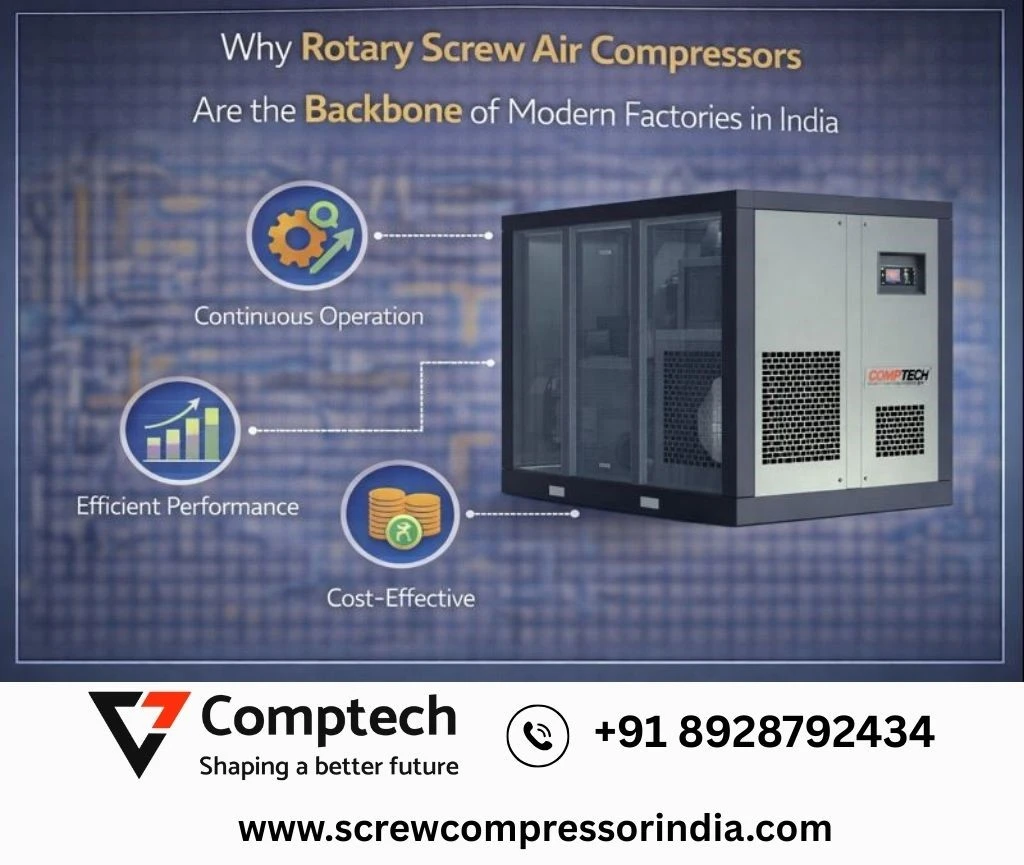
- Rotary Screw Compressors for long continuous weaving cycles
- High-Capacity Reciprocating Compressors for peak air demand areas
- Oil-Free Compressors for dyeing and finishing departments
Comptech Air Compressor
Best Air Compressor for Textile Mill in Khanjire Mala Ichalkaranji
High-Performance Compressor for Padmavati Nagar Ichalkaranji
Pneumatic System Supplier in Yadavnagar
Loom Compressor Dealer in Janta Nagar
Industrial Air Solutions in Kagwade Mala Ichalkaranji
Compressor Specialist for Ruikar Colony Mills
Best Compressor for Textile Units in Nagoba Mandir Area
Air Compressor for Processing Houses in Tambemala
Knitting Unit Air Solutions in Joshi Nagar Ichalkaranji
Industrial Compressors for Shahu Cooperative Industrial Estate
Energy-Efficient Compressors in Kabnoor Ichalkaranji
High-CFM Air Systems for Kurundwad Road Textile Belt
For modern textile factories in Ichalkaranji, a reliable compressor system isn’t optional—it is the foundation of consistent quality and efficient production. Selecting the right model and maintaining it properly can dramatically improve mill output and long-term sustainability.





Leave A Comment